Coconut Oil vs Argan Oil: Which One to Choose for Skin and Hair in 2024?
Torn between coconut oil and argan oil for your skin and hair? We've sorted it out for you: effectiveness, tolerance, uses—we compare these two natural skincare essentials.
Is your skin sometimes a bit too shiny or your hair sending out distress signals of dryness? Honestly, here’s what nobody tells you about coconut oil, often praised but not always the right fit. And most importantly, how does it stack up against argan oil, the iconic Moroccan natural beauty staple?
Why is coconut oil such a hot topic?
Coconut oil is often marketed as a miracle for skin and hair. It hydrates, nourishes, and even protects thanks to its saturated fatty acids. But beware, it’s not always the best choice, especially for oily skin types.
For dry, brittle hair, it penetrates the hair shaft well.
On dry skin, it provides an effective protective barrier.
However, it’s comedogenic, so it’s not recommended for acne-prone or oily skin.
⚠️ Avoid: Coconut oil on oily or blemish-prone skin—it can clog pores and worsen breakouts.
Argan oil: a Moroccan classic that delivers
Pure, cold-pressed argan oil is packed with antioxidants and vitamin E, nourishing without weighing down. It protects skin from aging and repairs damaged hair.
Suitable for almost all skin types, including combination and oily skin.
Hydrates without leaving a greasy residue, perfect for daily use.
For hair, it adds shine and softness without heaviness.
💡 Our tip: Use argan oil as a serum after shampooing to tame frizz and nourish without greasiness.
Side-by-side comparison: which oil for which need?
We tested both oils on various skin and hair types. Here’s what we found:
Dry skin: Both oils hydrate well, but coconut oil creates a thicker barrier, perfect for winter.
Combination to oily skin: Argan oil clearly wins, hydrating without clogging pores.
Dry, damaged hair: Coconut oil penetrates deeply, but be careful not to overdo it or it can weigh hair down.
Fine or oily hair: Argan oil is preferred for its lighter feel.
⚠️ Avoid: Applying too much coconut oil on fine hair can make it heavy and flat.
Cosmetic benefits linked to their composition
Coconut oil is rich in saturated fatty acids, especially lauric acid, which has antibacterial and antifungal properties. This makes it a useful ally against certain skin infections, as well as a good moisturizer. However, its thick texture can clog pores, explaining its comedogenic effect. On the other hand, argan oil contains a high concentration of unsaturated fatty acids, including oleic and linoleic acids, plus vitamin E, a powerful natural antioxidant. This combination gives it nourishing, regenerating, and protective properties, suitable for daily use on all skin types.
Environmental and economic stakes around these oils
Beyond cosmetic benefits, it’s important to highlight the environmental issues linked to producing these oils. Coconut oil is mainly produced in tropical regions where intensive farming can lead to deforestation and significant ecological impact. Meanwhile, argan oil comes from a Moroccan endemic tree that grows in semi-arid areas, playing a crucial role in combating desertification. Its production also supports the local economy, especially through women’s cooperatives that preserve this ancestral know-how. Choosing argan oil means supporting a sustainable and fair trade industry.
Practical tips to include these oils in your beauty routine
To fully enjoy the benefits of these oils, adapt their use according to your skin type and needs. Coconut oil can be used as a pre-shampoo hair mask to deeply nourish very dry hair, or as a body treatment on very dry areas during winter. However, it’s best not to apply it on the face if you have oily or blemish-prone skin. Argan oil, being lighter, can be used daily on the face as a moisturizer, on cuticles, or as a hair serum, adding softness and glow without greasiness. Whatever oil you choose, always opt for 100% natural, cold-pressed products and do a patch test before applying.
The real question to ask before buying
Beyond marketing hype, choose based on your skin and hair type. Argan oil is more versatile, while coconut oil is a targeted treatment that requires caution.
💡 Our tip: Always do a patch test on a small skin area before starting a new oil treatment, especially if you have sensitive or blemish-prone skin.
Our verdict
Honestly, here’s what nobody tells you: coconut oil is wonderful for very dry hair and skin, but it’s not a one-size-fits-all product. For most of us, argan oil is the undisputed star of natural care, offering the perfect balance of hydration, lightness, and tolerance. Our advice: if you have to pick just one, go for argan oil for an easy, effective daily routine.
In summary
Choosing between coconut oil and argan oil mainly depends on your skin and hair type. Coconut oil, rich and protective, is ideal for very dry skin and hair but not recommended for oily skin due to its comedogenic potential. Argan oil, on the other hand, is versatile, lightweight, and beneficial for most profiles, while also supporting an ethical and sustainable approach. With this knowledge, you can better tailor your beauty routine for effective natural care that respects both your skin and the environment.
✨ Our recommendation
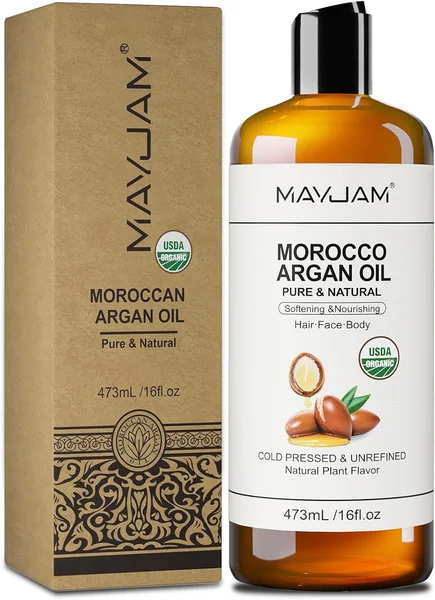
Organic Argan Oil 473ML, Argan Hair Oils
Pure Natural Cold-Pressed Argan Hair Oils, Treatment Oil for Face, Skin, Hair, Moisturizing & Anti-Aging