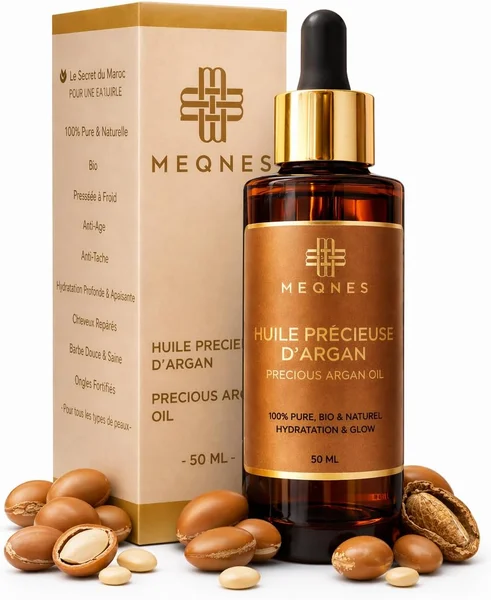
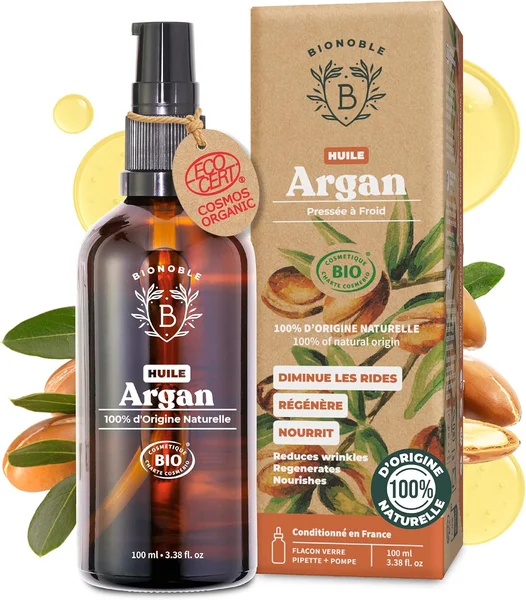
Discover how argan oil for the face, rich in fatty acids and vitamin E, acts as an effective and non-comedogenic anti-aging treatment, ideal for all skin types.
Argan oil is renowned for its exceptional richness in active ingredients beneficial for the skin. Its INCI composition reveals about 85% essential fatty acids, mainly oleic acid and linoleic acid. These fatty acids nourish and strengthen the skin barrier.
It also contains vitamin E, a powerful natural antioxidant, as well as squalane, a moisturizing agent that provides suppleness and softness. The polyphenols present in argan oil offer protection against oxidative stress, thereby helping to slow down skin aging.
A Natural Anti-Aging Treatment for Firmer Skin
Argan oil is a valuable ally in fighting signs of aging. By promoting collagen synthesis, it helps improve skin firmness and reduce the appearance of wrinkles.
Its antioxidant action protects skin cells from external aggressions, thus limiting skin sagging. Used regularly, it contributes to a brighter complexion and smoother texture.
How to Incorporate Argan Oil into Your Facial Routine?
Apply 2 to 3 drops of argan oil on clean, slightly damp skin, preferably in the evening.
Gently massage with your fingertips to promote absorption.
Argan oil is compatible with SPF creams and retinol treatments, making it an ideal complement in a complete anti-aging routine.
Argan Oil and Oily Skin: A Possible Duo
Contrary to some misconceptions, argan oil has a comedogenic rating of 0, meaning it does not clog pores and is perfectly suitable for oily or acne-prone skin.
It even helps regulate sebum production thanks to its richness in linoleic acid, which is often deficient in oily skin types.
Myths and Realities about Argan Oil and Pores
Myth: Argan oil clogs pores and worsens blemishes.
Reality: With a zero comedogenic rating, it nourishes without clogging, and its anti-inflammatory properties can soothe sensitive skin.
Comparison: Argan Oil, Rosehip Oil, and Jojoba Oil
These three vegetable oils are praised for their effects on the skin, but their profiles differ:
Argan Oil: Rich in unsaturated fatty acids and vitamin E, ideal for nourishing, protecting, and firming the skin.
Rosehip Oil: Highly concentrated in essential fatty acids and vitamin A (natural retinol), it is known for reducing scars and pigmentation spots.
Jojoba Oil: Its composition is close to human sebum, making it an excellent sebum regulator, particularly suited for combination to oily skin.
The choice between these oils therefore depends on your specific needs, but argan oil remains a reliable option for daily anti-aging and moisturizing care.
 FR
FR EN
EN