Looking for genuine virgin organic argan oil? Watch out for traps! We're sharing the 7 essential criteria to identify quality argan oil and avoid unpleasant surprises.
Afraid of getting ripped off when buying your argan oil?
We know argan oil is a Moroccan treasure with a thousand virtues for skin and hair. But with its popularity, the market is flooded with products of varying quality, or even outright fakes. How can you navigate this and make sure you're buying the real deal, the one that will deliver on its promises? Don't panic, we've decoded the 7 essential criteria for choosing a top-quality argan oil for you.
Why it's crucial to choose your argan oil wisely
Pure, cold-pressed argan oil is an exceptional treatment. It nourishes, hydrates, repairs, and protects. But diluted, heated, or poorly stored oil will lose a large part of its properties, and could even be harmful. That's why it's essential to know how to read labels and understand what makes an oil high-quality.
To help you sort through it all, here are the key elements to check before you splurge on a bottle of argan oil.
1. Color: a precious visual indicator
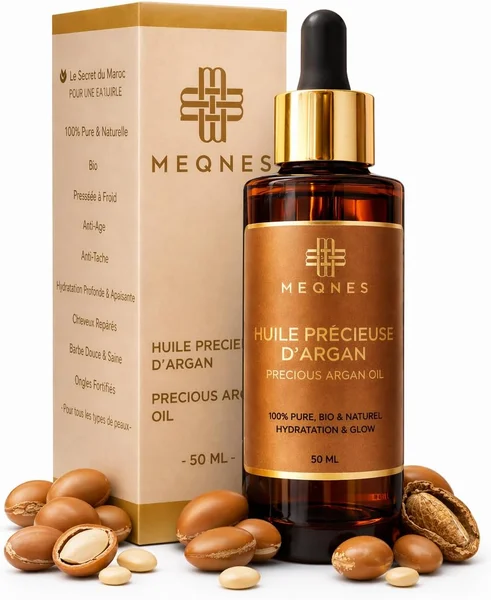
A quality virgin argan oil should have an amber color, more or less dark, but always translucent. If it's too light, too yellow, or conversely, opaque, be wary. This could indicate a refined, heated oil, or one mixed with other less noble oils.
The scent is another strong distinguishing feature. Virgin argan oil has a light, nutty aroma, typical of roasted kernels before pressing. It's present but subtle; it shouldn't be overpowering or chemical. A complete lack of scent might signal a refined product, and a strong, unpleasant smell indicates poor quality or poorly stored oil.
3. The INCI list: the universal language of ingredients
Look carefully at the ingredient list (INCI). For pure argan oil, you should only find: Argania Spinosa Kernel Oil. If other ingredients appear, especially mineral oils (Paraffinum Liquidum, Petrolatum) or silicones (Dimethicone, Cyclopentasiloxane), run away! It's not pure argan oil.
This is THE fundamental criterion for preserving all the precious properties of the oil. Cold-pressed means the kernels were not heated before being pressed. This preserves vitamins, essential fatty acids, and antioxidants. Look for the mention "cold-pressed" or "virgin" on the packaging.
💡 Our tip: If possible, opt for oils sold in amber or opaque glass bottles. This protects the oil from light, which can degrade its active components.
5. Organic certification: a guarantee of trust
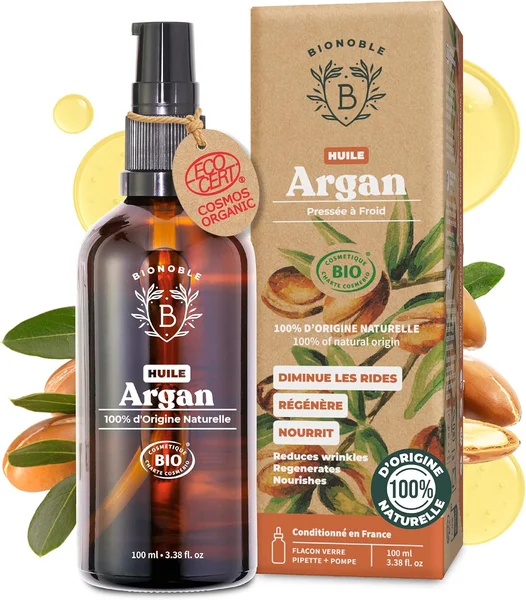
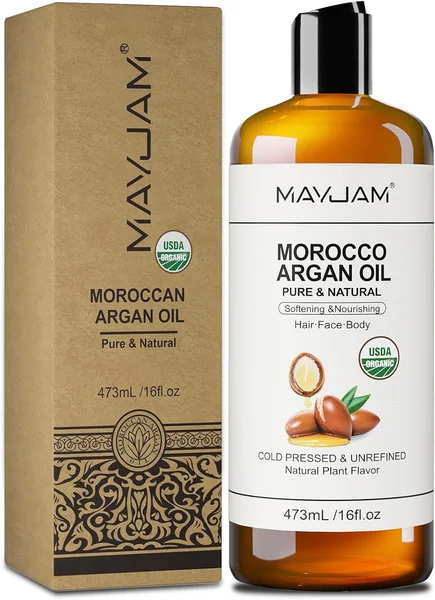
An organic certification (like Ecocert, Cosmebio, USDA Organic) guarantees that the oil was produced according to strict standards, without pesticides or synthetic chemicals. It's an undeniable plus for quality and environmental respect. While uncertified oil can be very good quality, certification provides extra security.
6. Price: not always the cheapest, but the fairest
Argan oil is precious, and its extraction process is long and laborious. If an argan oil is sold at a ridiculously low price, it's often a sign that something is amiss. It's likely diluted or of poor quality. A fair price reflects the quality of the ingredients and the artisanal work behind it.
⚠️ Avoid: Argan oils sold in plastic. Plastic can migrate into the oil and alter its composition, in addition to being less eco-friendly. Prefer glass.
7. Origin: Morocco, of course!
The argan tree is endemic to Morocco. Make sure the oil actually comes from Morocco. Berber women's cooperatives are often the best guarantors of traditional, quality production. Some brands highlight their partnership with these cooperatives, which is a good indicator.
The ancient history of argan oil: a precious heritage
Argan oil is not a new discovery. Its use dates back centuries, even millennia, among the Berber populations of Morocco. These populations discovered and exploited the exceptional virtues of this sacred tree, the argan tree, which grows exclusively in a specific region of southwestern Morocco. Berber women developed ancestral know-how to extract this precious oil by hand, a long and meticulous method that guarantees optimal quality. This expertise, passed down through generations, is now recognized by UNESCO as intangible cultural heritage of humanity, highlighting the importance of preserving these traditions and the unique environment that allows the argan tree to thrive.
The unsuspected benefits for radiant skin and sublime hair
Beyond its cosmetic aspect, argan oil is packed with essential nutrients that act deeply. Rich in vitamin E, a powerful antioxidant, it effectively fights skin aging by neutralizing free radicals responsible for wrinkles and skin sagging. Its essential fatty acids, particularly oleic acid and linoleic acid (omega-6), help restore the skin's lipid barrier, thereby improving its hydration and suppleness. For hair, it nourishes the hair fiber, repairs damaged ends, adds shine and softness, and can even help combat hair loss.
The impact of different extraction methods on final quality
As mentioned earlier, the extraction method is decisive. Cold pressing, by mechanical pressing without heating, is the method of choice for preserving the integrity of nutrients. Conversely, hot extraction, which uses heat to speed up the process and increase yield, degrades some of the vitamins and unsaturated fatty acids. The oil obtained by this method is often cheaper but also less beneficial. Some more industrial methods may involve the use of chemical solvents, which should be absolutely avoided for pure cosmetic or food-grade argan oil.
Our verdict
Honestly, finding the right argan oil might seem complex, but by following these 7 criteria, you'll be giving yourself the best chance. Don't be swayed by prices that are too low or marketing promises. Always prioritize transparency: a clear INCI list, an authentic scent and color, and a mention of cold pressing. If there's one thing to remember: genuine virgin argan oil is an investment in your natural beauty that's well worth it. Go for it, your skin and hair will thank you!
 FR
FR EN
EN