FR
FR EN
EN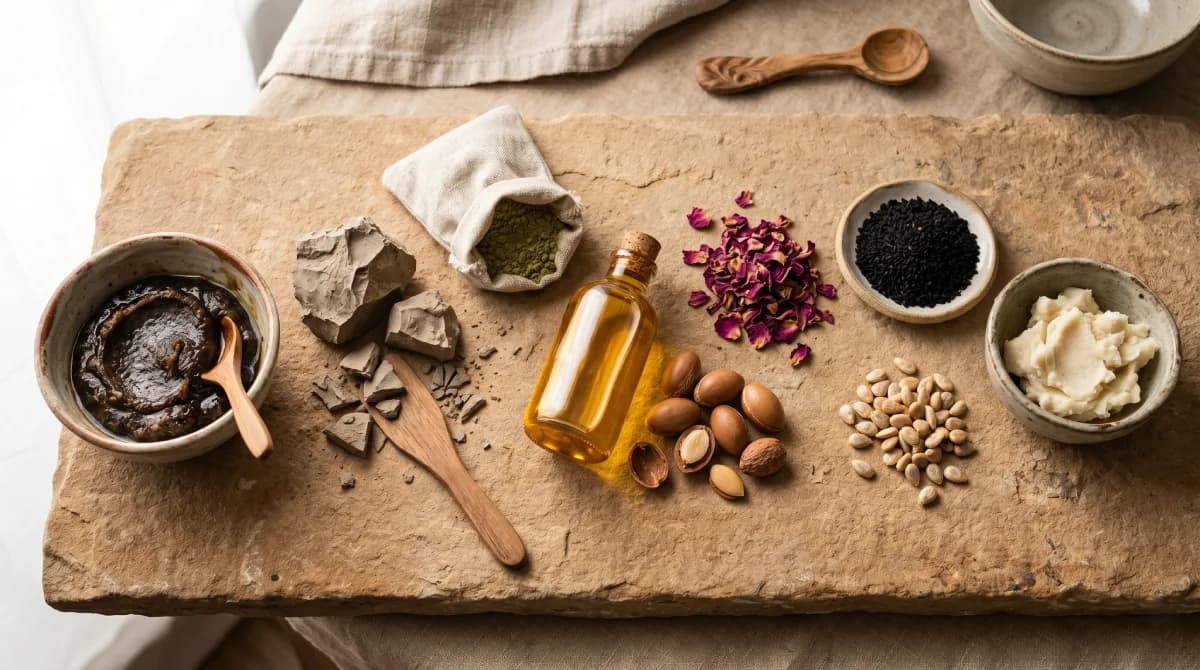
Moroccan Natural Beauty Glossary: 25 Essential Ingredients
Moroccan natural beauty draws its effectiveness from simple, authentic ingredients rich in virtues. Here is an alphabetical glossary of 10 emblematic ingredients, their origin, properties, and usage tips.
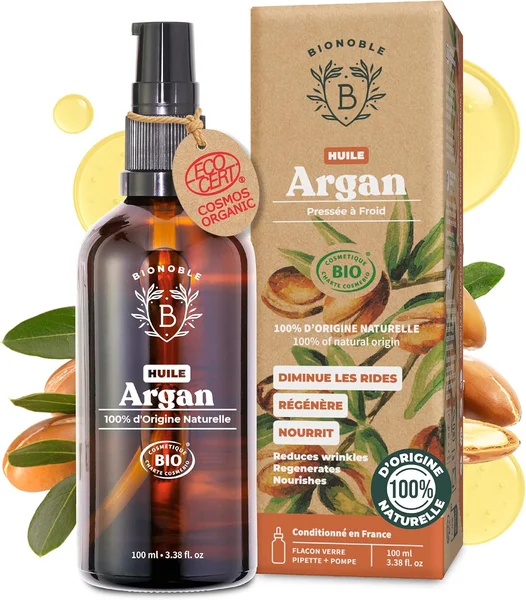
Argan (Argania spinosa kernel oil)
Origin: A tree endemic to southwestern Morocco, the argan tree produces fruits whose kernels are pressed to extract the oil.
Properties: Moisturizing, antioxidant, and restorative, argan oil nourishes the skin, strengthens hair, and fights against skin aging.
How to use: Apply a few drops on the face, body, or hair by massaging or as a finishing touch for intense hydration and a natural glow.
Aker Fassi (dried pomegranate dye)
Origin: Powder obtained from dried pomegranate, traditionally used in the Fès region.
Properties: Natural dye, it provides warm red shades and a gentle mild exfoliation.
How to use: Mix with water or another ingredient to create a mask or a coloring paste for lips or cheeks.
Beldi (olive black soap)
Origin: Traditional soap made from olive oil, used in Moroccan hammams.
Properties: Gentle cleanser, natural exfoliant thanks to its pasty texture, it removes impurities and softens the skin.
How to use: Apply on damp skin, leave on for a few minutes, then massage with a Kessa glove before rinsing.
Ghassoul (Atlas clay)
Origin: Mineral clay extracted from the Atlas Mountains, used for centuries in Morocco.
Properties: Purifying, absorbent, and remineralizing, it gently detoxifies the skin and hair.
How to use: Mix with water or hydrosols to form a paste, apply as a mask on the face or scalp, let dry then rinse.
Henna (Lawsonia inermis)
Origin: Plant cultivated in several hot regions, henna is used in Morocco for natural coloring.
Properties: Natural red-orange dye, it strengthens hair and also has soothing properties for the skin.
How to use: Prepare a paste with henna powder and warm water, apply on hair or skin, leave on for several hours then rinse.
Neutral Henna
Origin: Powder obtained from the leaves of Cassia obovata, an alternative plant to classic henna.
Properties: Without coloring effect, it strengthens and softens hair, adds volume and shine.
How to use: Apply as a hair mask after mixing with warm water, leave on for 30 to 60 minutes then rinse.
Kessa (exfoliating glove)
Origin: Traditional rough fabric glove used in Moroccan hammams.
Properties: Mechanical exfoliant, it removes dead cells, stimulates circulation, and prepares the skin for treatments.
How to use: After applying black soap or another cleanser, gently rub the skin in circular motions before rinsing.
Kohl (traditional)
Origin: Natural powder often made from galena or charcoal, used for eye makeup.
Properties: Provides an intense and deep look, also has antiseptic virtues for the eyes.
How to use: Apply delicately on the mucous membrane or around the eyes using a small stick or fine brush.
Damask Rose
Origin: Ancient rose cultivated in the Valley of Roses in Morocco.
Properties: Moisturizing, toning, and soothing, it revitalizes the skin and delicately perfumes.
How to use: Use as a hydrosol to refresh and tone the skin, or as an infusion for its relaxing benefits.
Siwak
Origin: Branch or root of a tree called Salvadora persica, traditionally used for oral hygiene.
Properties: Natural antibacterial, it effectively cleans teeth and freshens breath.
How to use: Chew one end to release the fibers, then brush teeth with gentle movements.
Sulfur
Origin: Natural element extracted from mineral or volcanic sources, used in traditional cosmetics.
Properties: Anti-acne, antibacterial, and keratolytic, it helps purify oily skin and reduce imperfections.
How to use: Often incorporated in masks or soaps, apply locally on areas to treat while avoiding sensitive skin.
These natural ingredients are the pillars of authentic Moroccan beauty, combining tradition and effectiveness. Their regular use, adapted to each skin or hair type, reveals healthy, radiant, and balanced skin.