Moroccan Ghassoul: The Atlas Clay with Exceptional Beauty Benefits
Discover ghassoul, a natural clay sourced from the mines of Moulay Idriss in Morocco. Its purifying properties, unique mineral composition, and natural beauty uses make it a must-have in skincare.
Ghassoul, also called rhassoul, is a mineral clay extracted from the Atlas Mountains, mainly in the Moulay Idriss region of Morocco. Used for centuries by Moroccan women, it is renowned for its cleansing and purifying virtues. In 2023, the Moroccan hammam ritual, where ghassoul plays a central role, was inscribed on UNESCO's Intangible Cultural Heritage list, highlighting its cultural and traditional importance.
Unique Mineral Composition
The richness of ghassoul comes from its exceptional natural composition. This clay notably contains:
Silica: a mineral with gentle exfoliating properties that helps remove impurities.
Magnesium: known for its soothing and regenerating effects on the skin.
Calcium: which promotes cellular repair and skin firmness.
Potassium: essential for balancing hydration and revitalizing the complexion.
This composition gives ghassoul remarkable effectiveness while remaining non-irritating, suitable even for sensitive skin.
Purifying Properties and Benefits for Skin and Hair
Ghassoul stands out for its absorbent and purifying properties. It gently works to:
Eliminate toxins and impurities accumulated on the skin and scalp.
Rebalance sebum production, making it an ideal ally for combination to oily skin.
Soothe irritations thanks to its neutral pH and fine texture.
Strengthen hair structure, providing softness and volume.
Traditional Beauty Uses of Ghassoul
Purifying Face Mask
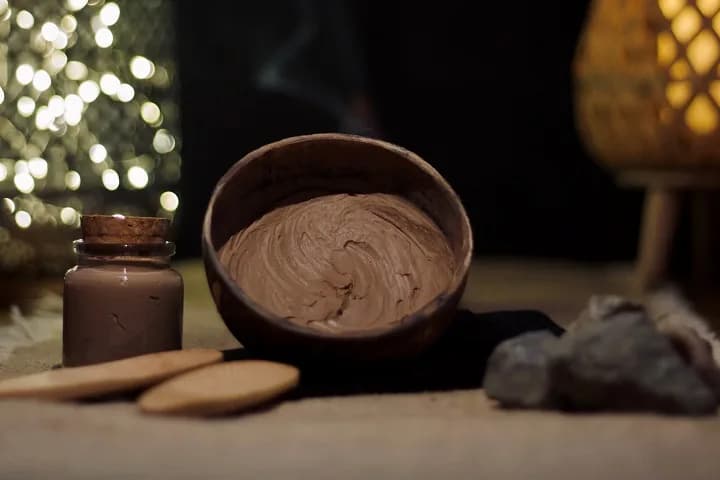
For a radiant complexion, mix 2 tablespoons of ghassoul with a little rose water until you obtain a smooth paste. Apply to the face, avoiding the eye area, leave on for 10 to 15 minutes, then rinse with lukewarm water. This mask helps eliminate impurities and tightens pores without drying out the skin.
Natural Shampoo for a Healthy Scalp
Ghassoul can replace a conventional shampoo, especially for oily or irritated scalps. Prepare a paste with ghassoul and lukewarm water, apply to wet hair, gently massage, then rinse thoroughly. Your hair will be clean, light, and voluminous.
Detoxifying Body Mask
Applied all over the body, ghassoul removes dead skin cells and revitalizes the skin. Mix it with lukewarm water or rose water for a pleasant sensory experience and gentle care, ideal before exfoliation or moisturizing treatments.
Homemade Recipe: Ghassoul and Rose Water
Combining ghassoul with rose water is a classic in Moroccan beauty. Rose water provides a soothing and refreshing effect, while ghassoul deeply purifies. To prepare your mask:
In a bowl, pour 2 tablespoons of ghassoul.
Gradually add 1 to 2 tablespoons of rose water until you get a homogeneous paste.
Apply to skin or hair, leave on for 10-15 minutes.
Rinse thoroughly with lukewarm water.
This natural recipe is suitable for all skin and hair types, even sensitive ones.
Ghassoul vs Green Clay and Kaolin: What Are the Differences?
Ghassoul, green clay, and kaolin are clays used in cosmetics, but each has distinct characteristics:
Green Clay: highly absorbent, ideal for oily and acne-prone skin, but can sometimes be irritating on sensitive skin.
Kaolin: a gentle clay, often white or pink, suitable for sensitive and dry skin, it cleanses without aggression.
Ghassoul: a balance between gentleness and effectiveness, it purifies without drying out, ideal for all skin and hair types.
The choice therefore depends on your skin type and specific care needs.
How to Recognize Authentic Ghassoul?
To ensure the authenticity of Moroccan ghassoul:
Choose a fine and light clay, beige to light brown in color.
Avoid products containing additives or artificial fragrances.
Look for certified Moroccan origin, especially from the Moulay Idriss mines.
True ghassoul does not foam and does not emit a strong odor.
Authentic ghassoul will offer you a natural experience that respects your skin and hair.
 FR
FR EN
EN